
Keynotes
Keynote I:
On the Symbiosis of Classical and Quantum Communications
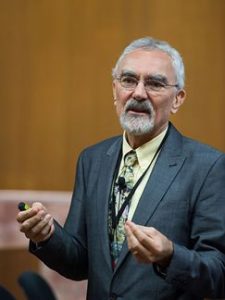
Prof. Lajos Hanzo
University of Southampton, UK
Abstract: In the current Near-Term Intermediate-Scale Quantum (NISQ) computing era, the number of quantum bits handled by quantum computers is still limited, yet – as we will discuss – there are already a suite of sophisticated solutions for harnessing Quantum Processing Units (QPUs) in support of wireless communications. At the same time, ultimately secure quantum key distribution (QKD) has reached commercial reality and has found its way into high-security banking, defence and governmental applications. Despite this relative maturity, numerous limitations exist in quantum communications. Hence a wide community-effort is required for solving the suite of open problems and circumventing quantum communications calamities. Based on the paper “Quantum Information Processing, Sensing and Communications: Their Myths, Realities and Futures” by L. Hanzo et al., in Proc. of the IEEE, 2025, the marriage of classical and quantum communications will be discussed, outlining their intricate symbiosis.
Brief Bio: Prof Lajos Hanzo holds the Chair of Telecommunications and directs the research of Next-Generation Wireless at the University of Southampton, UK. He received Honorary Doctorates from the Technical University of Budapest (2009) and Edinburgh University (2015). He is a Foreign Member of the Hungarian Academy of Sciences, Fellow of the Royal Academy of Engineering (FREng), of the IET, of EURASIP and holds the IEEE Eric Sumner Technical Field Award. He has published widely and has helped the fast-track career of 126 PhD students.
Keynote II:
Construction of 3D Urban Models from Geospatial Data with Semantic Annotation,
Dr Michela Spagnuolo
IMATI-CNR, Genova, Italy
Brief Bio: Prof Michela Spagnuolo is Director of the Institute for Applied Mathematics and Information Technologies (IMATI) of the Italian National Research Council (CNR), Italy. Her research focuses on geometric and topological methods for 3D shape modeling and processing, semantic annotation of 3D content, and the integration of geometric and contextual information for data analysis. Over the past years, her work has increasingly addressed the construction of urban digital twins from geospatial data, supporting the monitoring, simulation, and planning of smart cities. She has coordinated and participated in numerous national and European research projects in computer graphics, geospatial data processing, and digital twins. She is currently President of the Eurographics Association.

Keynote III:
Structuring Randomness in Neural Network Training,
Dr Ethem Alpaydin
Independent Researcher, Istanbul
Brief Bio: Ethem Alpaydın MAE holds the BSc (Department of Computer Engineering, Boğazici University, 1987), and Docteur es Sciences (École Polytechnique Fédérale de Lausanne, 1990) degrees. He was a postdoctoral fellow at the International Computer Science Institute, Berkeley in 1991 and joined the Department of Computer Engineering of Boğaziçi University, Istanbul in the sqme year, rising to Professor. He was a Fulbright Senior Scholar in 1997/1998 ad joined the Department of Computer Science at Özyeğin University as a Professor in 2019. After his retirement in 2026, he conducts independent research. He is a member of The Science Academy, Turkey, and of Academia Europaea, and has authored the following books:
– E. Alpaydın (2020). Introduction to Machine Learning, 4th edition. Adaptive Computation and Machine Learning series, MIT Press. (Previous editions appeared respectively in 2004, 2010, and 2014. The book was translated into Chinese, German, and Turkish.)
– E. Alpaydın (2021). Machine Learning, Extended and Revised Edition, Essential Knowledge Series, MIT Press. (Previous edition, Machine Learning: The New AI was published in 2016. The book was translated into Japanese, Russian, Korean, Chinese, Turkish, Croatian, and Finnish.)
– E. Alpaydın (2025). Fundamentals of Probability and Statistics for Machine Learning, MIT Press.
Abstract: Randomness enters machine learning at several levels. Most fundamentally, the training set is itself a random sample from an underlying data distribution, so even a deterministic learning procedure produces parameters that are random variables. Neural-network training introduces further randomness through initialization, minibatch selection, stochastic optimization, and related mechanisms. At the other extreme, random-feature methods deliberately use randomly generated weights, typically drawn from a fixed isotropic distribution. This talk explores an alternative perspective: rather than trying to eliminate randomness or accepting a fixed random distribution, can we use the data to structure randomness so that it is better suited to the task? The HalfNet model will be discussed as a realization of this principle for neural networks, providing a continuum between fixed random features and fully learned networks. This approach suggests a broader view of learning in which the object(s) being learned need not be a particular set of parameters, but the distribution from which useful parameters can be generated.
Technically Co-Sponsored by the IEEE Computer Society


